The pros and cons of the culture of volunteerism in Namibia

I was stunned to see that it’s been more than a year since I wrote a post on this site. Well, family issues did play a role in this lack of activity, as did a nagging awareness that social media is responsible for a catastrophic contribution towards global carbon emissions through its profligate use of electricity generated by fossil fuels. I am not a doom-and-gloomer when it comes to the many productive applications of social media – I am certainly an avid consumer myself, albeit (I hope) a discerning one – but I do try to rein in my use of it, and limit how many posts, stories and updates I contribute on various platforms.

(It’s also not escaped my notice, of course, that WordPress promotes the use of AI technology for the creation of images etc…”Down with this sort of thing” as they say on Craggy Island!)

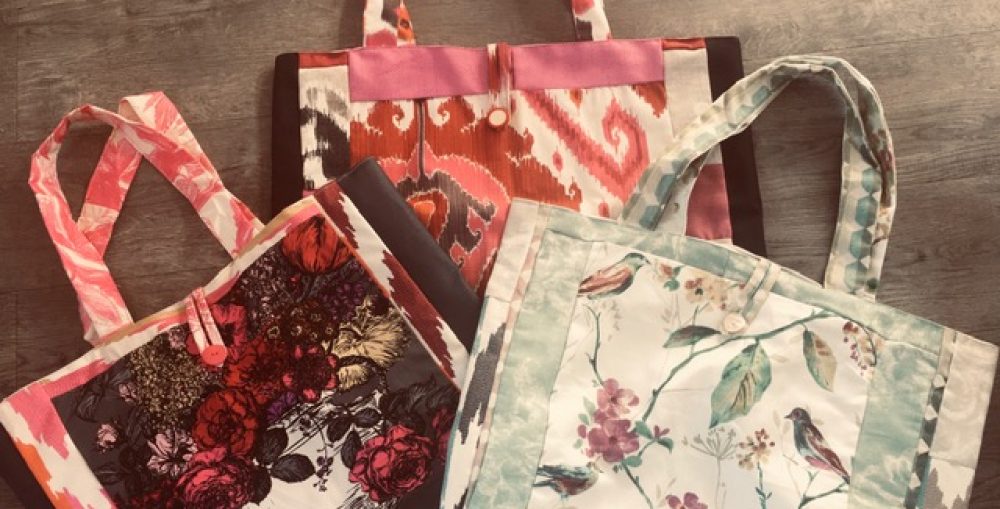
However, the chief reason for a lack of webpage activity has been the fact that, perhaps more than at any other time in my life, I have been BUSY in ways I could not have foreseen this time last year. I continue to joyfully manage the Sew Good Namibia project on a volunteer basis, responsible for marketing and logistics while our four craftswomen create their wonderful designs (currently sold at 12 outlets around the country) to support their families. I’m also still writing the short stories that are regularly published in online journals and magazines – a second collection of which will soon appear in print (as The Limbo Circus) through the marvelous Modjaji Books.

However the principal reason why my days are filled with bustle and hustle is the incredible growth of the Promising Pages Pilot Initiative (PPPI) that was launched early last year. I have been overwhelmed by the success of the pilot phase since we kicked off with a few requests for book donations and suggestions for sites where we could put up suitable receptacles where ordinary Namibians could ‘Take a book. Read a book. Return a book’. As always, identifying dynamic individuals who understand a hypothetical idea and want to see it flourish as a practical enterprise entails expending a GREAT deal of time and effort with others who turn out to be time-wasters in the end. And, as I discovered with ‘Sew Good Namibia’, it’s critical to let a project develop organically in its own time, and in its own way, rather than imposing inflexible and unrealistic expectations on an untried concept.

In addition, each and every one of the thousands of books, pamphlets, journals, study guides, and magazines that have been given to the PPPI to date have to be assessed for suitability (older, pre-Independence materials, especially, will not pass muster in these more enlightened times and have been donated to the Katutura Community Arts Centre for use in installations and other artworks). Then these have to be categorised according to the the age of the readership and genre before being packed up ready for distribution.

At the time of writing we now have little library installations in disadvantaged communities in Okahandja and Hakahana, with others scheduled soon for the Physically Active Youth and Mammadu Trust premises in Katutura, Windhoek. The University of Namibia Main Campus also has two large bookshelves in place and regularly replenished with a wide range of fiction, textbooks, non-fiction and Africana. It was amazing to see how many faculty and students turned up for the official launch in March, racing to select some reading matter to borrow the minute the ribbon was cut on the shelving. More little libraries will be established at Groot Aub and Rehoboth, to the south of Windhoek, in the near future and plans for further expansion are in the works.

All this requires a great deal of time, effort, admin, petrol and schlepping, 7 days a week, which I am thrilled to have the hours and energy to still contribute right now. I’ve also expanded my circle of friends as generous donors and enthusiastic community members embrace the PPPI idea and help it to expand. An additional gift.

Promising Pages Pilot Initiative (PPPI) poster created in four languages widely used by Namibians

BUT. Namibia has a huge cohort of keen, articulate, educated and media-savvy young people currently looking for work. Our youth unemployment rate is almost 3 times the global average. It is unsustainable for PPPI to continue to be administered and run by one, unpaid volunteer yet this is how so many grassroots projects continue to exist in Namibia while expensive, pie-in-the-sky propositions receive extensive taxpayer funding only to sink without a trace. If the government and international funding bodies are serious about producing future generations conversant in a language that’s not the mother tongue for the vast majority of them, then movements – such as the PPPI – that increase access to English-language materials need to be formalised and then supported by appropriate institutions and development partners. Furthermore, local authors and creatives need financial support to produce books that reflect the lives of our young citizens, published in our indigenous languages for free distribution around the country.

The search is on for someone, or a group of someones, who can take the PPPI and turn it into a sustainable model for a nationwide network of fixed installations and mobile libraries while being paid a decent salary to do so. Let’s hope that by the time I check in again, this will have become a reality.

Bridging the literacy gap in Namibia

Back in the mists of time, I wrote a section of this blog concerning how Namibian learners are leaving educational institutes with only a sketchy competence when it comes to the country’s only official language, English. At that time I was hoping to see a few manuscripts I had written get taken up and developed into materials that would help to bridge this gap. (See under: ‘Good and READy’.)

Nothing really came of this, finances being a familiar constraint, and I filed the whole idea under ‘seemed like a good idea at the time’. But a couple of things have happened fairly recently that reawoke my interest in seeing if there wasn’t a way to give disadvantaged Namibians (children, especially) access to reading materials that would otherwise not be available to them.

Firstly, I visited my family in a very rural part of Germany last year and noticed that, in the absence of the type of services that people in towns take for granted, the community had done some wonderful improvising. Not only were farm-fresh products available in tiny, weatherproof kiosks by the side of the road (with the eggs, jams etc. paid for through an honesty system) but a little cabinet filled with books had been installed by a bus stop so that people (chiefly adults) could take, read, and return any volumes that caught their eye. Why, I asked myself, couldn’t we have a similar little library movement in Namibia?

Secondly, at the start of this year, I read an article in our daily English-language newspaper by a perceptive man (apologies – I cannot find it in their online archives) extolling the virtues of school libraries for the role they play in introducing children to a reading culture. As I believe he mentioned, many of our most promising young school-leavers fail to progress to tertiary education simply because they lack proficiency in English, which remains the mother-tongue language for a vanishingly small percentage of our population. Yet establishing and stocking school libraries has historically been outside the capabilities of the relevant ministries.

It seemed to me that it would be a good moment to revisit the idea of a little library-type of initiative – especially as the movement seems to be gaining traction globally. (The US-based ‘Little Free Library‘ organisation, for example, has in excess of 175,000 sites across 121 countries, although for various reasons it would not be a good fit here in Namibia.) Fortuitously, at the same moment, I was put into contact with Alicia Dipierri (of the NGO ‘Umbrella Initiatives‘) and then I floated the idea with Anita Witt (of ‘Recycle Namibia Forum‘), both of whom are dynamic and enterprising women with energy to spare. They willingly got on board and so a small, informal team was established to push the idea forward.

A little library receptacle design will always need to be adapted to local conditions and preferably be positioned where members of the public will have unrestricted access. (Photograph on the left, copyright: Alicia Dipierri).

So, I put out a call to friends to see if they could donate a few second-hand volumes to kick-start the endeavour – and ended up with more than 500 books (!), mostly in English. Many are for adult readers but that’s actually OK; the idea behind what we are now calling the ‘Promising Pages’ pilot initiative is simply to get paper books into the hands of people who would not otherwise have access to them. We are also scoping a couple of sites in Windhoek where suitable receptacles could be installed and then monitored to assess whether there is actually a demand for this in practice.

This was our initial inventory in April 2024, when I first asked a few friends to donate books they didn’t want any more. 500 books take up a LOT of room and have to be stored away from mice, termites and other denizens of the veldt, where I live!

The ultimate goal – should the informal pilot prove successful – would be to hand off the Promising Pages project to a young, energetic Namibian who could help it to grow. This would mean approaching NGOs for funding so that the project can be led by a paid professional, rather than relying on volunteers. We are well aware, too, that there are significant gaps in the the materials we have received in terms of books in indigenous languages, and also those written by people of colour, so these would need to be purchased. And one day, wouldn’t it be great to have a small fleet of vans visiting outlying, rural areas once a month so that people – young and old – can swap the book they have read for a new reading experience? (Way back in the day, this was, in fact, how I learned to read – a mobile library visited the street where my family lived in southern England and my brother, sister and I eagerly dove in and replaced the books we had read with a new set. For free, because reading is a priceless asset.)

A sustainable model would also require that books are chosen and sourced in volume, rather than through the kindness of friends who are downsizing. One idea would be for big local tourism companies to ask their clients to pack a few books in their luggage to hand over on their arrival here – I think that most people visiting Namibia from the Global North are well aware of the poverty many Namibians must endure, and wish to help.

Watch this space to see how Alicia, Anita and I get on. And if you have any books you would like to donate, or want to purchase books for us to fill some of our critical ‘gaps’. then get in touch (+264 81 1271741).