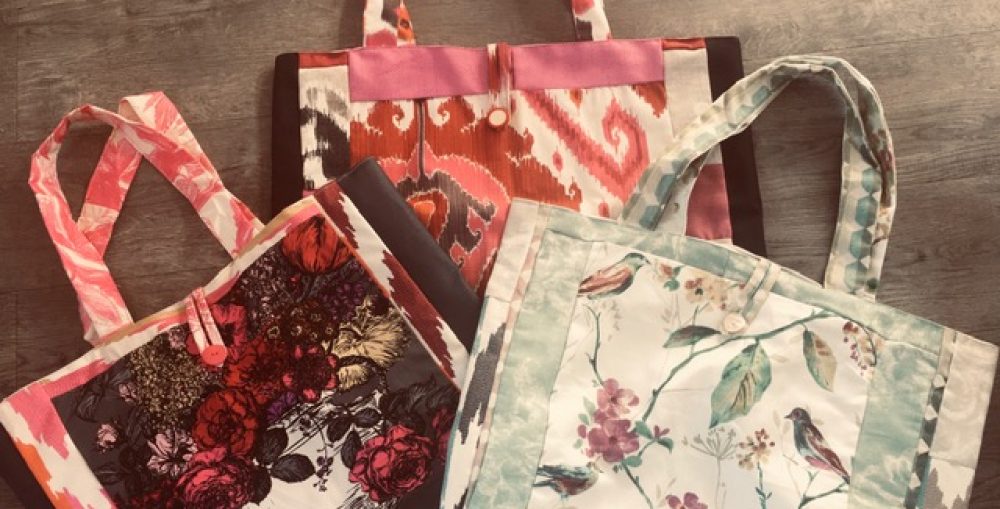
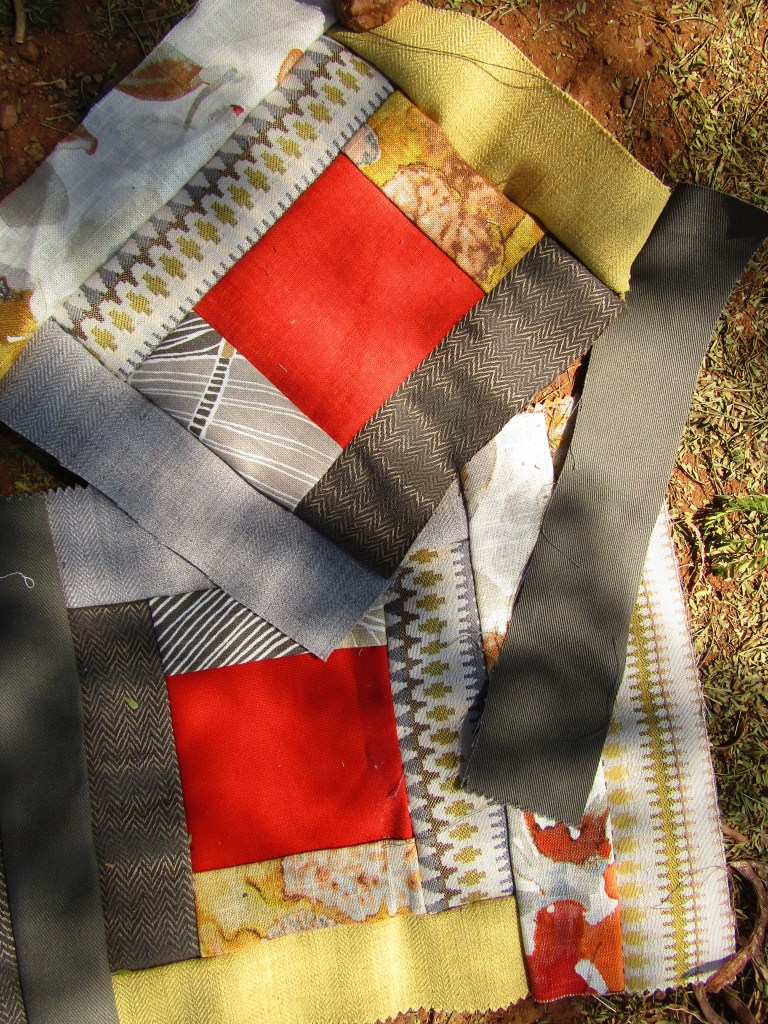
The ‘Sew Good Namibia‘ project has a new member, who will be focusing on hand-sewing patchwork blocks in order to expand the range of products the group can offer. Ms Amory Tjipepa works in the security control room of an estate outside Windhoek and has plenty of time on her hands to make up these items from strips of contrasting furnishing fabric while she is on duty. Clients will be able to then have the finished squares made into cushions, quilts and pet beds.
(2026 update: since its inception, the ‘Sew Good Namibia’ project has remained – of necessity – a micro-scale operation. This is partly a function of the supply of its raw materials – donations of usable discontinued furnishing fabric samples are small in volume, only intermittent, and never guaranteed. But also, taking on a new craftsperson, training them, achieving high standards through strict quality control, and motivating them to create items when they only get paid once the product is sold has meant that, at the time of writing, we only have four women making items for the co-operative. Many, many others have been taken on, then proven unsatisfactory for a variety of reasons. Therefore, in terms of communication and logistics, four has turned out to be the optimum number for smooth running of the business and plans to expand have been shelved for all time. However, as the fabric has to be prepared (sticky backing paper removed, shrinkable material washed) before it can be sewn, the women sometimes sub-contract this important step to the youth in their communities.)
 THE STORY OF 'GOOD FOR NAMIBIA!'