Smaller is Stronger

This blog has been inactive for a while now and with good reason. Although we have been ‘quarantined’ from most of the terrible effects of the coronavirus pandemic here in Namibia to a large degree, one thing we haven’t been spared is the toxic tsunami of ignorant or mischievous commentary, some of it point-blank lethal, that’s overtaken the Internet. I’d no desire to add to this pointless accumulation of speculation and anecdata and preferred to keep schtum until I had something useful and fact-based to say. Vent over…

My belief – admittedly an unpopular one in many Namibian quarters – is that the CDC and the Government of the Republic of Namibia exhibited admirable leadership in reacting hard and fast to the threat of Covid-19. I’m very happy to acknowledge that here and express my personal thanks. It has been a really, really tough time at the household level for many disadvantaged citizens, not to mention ethical business people struggling to make ‘best worst’ decisions that will allow their operations to remain afloat. But no one has died from the virus to date – I really think that’s worth emphasising – and no one will die from the longer-term consequences of the business shutdown if we take a moment to look at how our economy needs to be diversified and localised.

The day it was announced that Namibians would have to wear face masks in public, a veritable army of home-producers swung into action, including the women of the ‘Sew Good’ project. Not to be snarky but I hope that the international pharmacy chains charging exorbitant prices for environmentally unfriendly disposable masks took a massive hit as people took up the challenge of ‘local is lekker’.

As restrictions are eased, I’m optimistic that the national sense of community engendered by the crisis will not turn out to have just been a temporary blip, but will translate into a desire to resuscitate the economy in every way we can…and certainly this should mean that, wherever possible, people support local producers rather than pivoting back to the default setting of purchasing goods (especially ones with sketchy ‘green’ credentials) manufactured abroad, with all this means in terms of reducing the environmental damage caused by long-haul transportation.

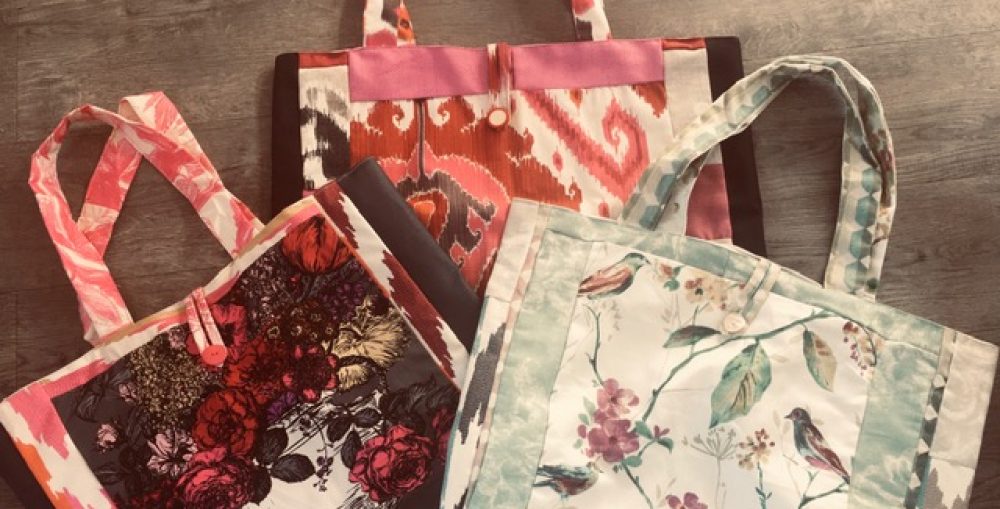
The bags produced by the ‘Sew Good’ craftswomen just get more and more stunning

Of course, ‘Sew Good’ wasn’t able to distribute and sell its products during the lockdown, and our hopes of creating a sustainable market through sales to tourists were set back somewhat. Nevertheless, the ladies have certainly not been idle and we are accumulating shopping bags and tote bags for sale once circumstances allow.

Souvenirs, self-catering, and scaling up

Before setting up a commercial endeavour, we’re told we need a business plan, a budget, a forecast – a bucketload of ‘wishful thinking’, truth be told, when you’re trying to enter the market in a recession and with a product that’s untried and untested. For the projects under the ‘Good for Namibia’ banner, this means that (if you will pardon the pun) business development is likely to be a far more organic process.

As Amory, Julia and I have discovered with the pilot enterprise, ‘Sew Good’, some of our objectives and plans have fallen away as others have emerged to take their place. Certainly, my initial idea to market items and take orders online hasn’t taken off: Namibia, it seems, isn’t ready to purchase products without seeing them. And environmentally conscious locals already have their own reusable shopping bags, often purchased overseas, so they’re not ready to buy more (albeit they report never remembering to take their existing ones out of the car when they visit the store!)

The latest stats show a small but steady growth in visitors coming to Namibia over the past decade and so these folk represent the group of consumers we are aiming to reach in 2020, while we continue to meet the needs of locals who are growing increasingly aware of ‘green living’ choices of course. We’re therefore very happy that speculative emails recently sent to a few Windhoek B&B and self-catering accommodation establishments have resulted in some interest from managers who wish to offer our patchwork bags to visitors who will be looking for locally made souvenirs and reusable bags for shopping in town or travelling around the country – especially important since the ban on single-use plastic bags in national parks came into force.

Lined tote bags made by the ‘Sew Good’ project specifically for the tourism market. Thanks to all at @RivendellGuestHouse for agreeing to stock the first consignment.

A big ‘Thanks!’ therefore to Erika at the Rivendell Guest House (http://www.rivendell-namibia.com/) who liaised with the owners and arranged to place some of our bags on consignment, the such first place to do so. We hope that as the tourism season begins we will be able to deliver regular volumes for this establishment to sell on our behalf, as well as to backpacker lodges and similar places. This is probably a more realistic way to sell the bags than renting a stall at the regular markets (which mostly cater to locals), especially as the hardworking women of the project simply don’t have time to attend to a stand over the weekend when they work all week already.

‘Sew Good’ expands its reach

It’s now six months since the first project under the ‘Good for Namibia’ banner got going and this week I believe that we – Julia, Amory and our newest ‘Sew Good’ member, Flora (plus myself) – can finally say that we have become a pretty finely tuned production unit. We are now receiving regular orders from established clients who wish to gift our products to others, as well as generating further interest through appearances at markets in town.

This week Julia (pictured) and her friend Flora made a total of eight shopping bags ordered by Windhoek customers to give as Christmas presents. The ‘soft launch’ is officially over!

While production levels are always going to be dictated by the availability of donated fabric, domestic demand will also affect sales, especially as we are gripped by the long recession still. We are therefore thrilled that Ms Meke Imbili of Xceptional Tourism Services (http://www.ecotours-namibia.com/) is going to be featuring the work of the project in her company’s ‘Katutura Interactive and Cultural Township Tours’. This will give the producers an opportunity to meet and greet potential clients in their home workshops in Otjomuise and allow tourists to purchase items directly, witnessing at first hand how the income will be valued and utilised. (Without being too cynical, it’s perfectly possible for unsuspecting visitors to spend a great deal of money in Namibia with only a tiny fraction actually going back into the local economy.)

Meke is just the sort of dynamic young Namibian who has the energy and skills to promote the inclusion of disadvantaged and marginalised communities in sustainable tourism. We look forwards to a productive and profitable working relationship in 2020!

Notes from a pop-up

Yesterday I spent the morning outside a large supermarket in the centre of Windhoek, showcasing ‘Sew Good’ items at the invitation of the Namibia Bird Club, which was selling its calendars there too. Besides discovering that there’s a fine line between engaging potential customers through banter and making them feel borderline harassed, the time spent allowed me to engage in a bit of fieldwork.

Firstly, it was clear that the vast majority of people heading to the shop in question already had their own reusable bags – most of which seemed to have been purchased in-store previously (although many admitted that they tended to forget to bring them along at times!) However, the reusable recycled-plastic bags (plus paper sacks and canvas bags) sold by major retail chains in Namibia are NOT made locally, although engagement with the management of one company may allow the ‘Sew Good’ project to rectify this in the future. If so-called eco-friendly products need to be transported long distances then, of course, their value as ‘green’ products diminishes.

Only perhaps 10% of customers were still buying ‘single-use’ plastic bags at the till to hold their purchases although – as several pointed out – the bags would be repurposed at home later or, indeed, used over again at the shop (https://www.independent.co.uk/environment/plastic-bags-pollution-paper-cotton-tote-bags-environment-a9159731.html).

Secondly, an alarming number of people were leaving the store with a cart literally filled with purchased bottled water. The city is currently operating under water restrictions because of the recurrent drought but penalties only accrue for truly profligate use, such as that resulting from garden sprinklers left on all night, so it doesn’t make sense that people would be buying expensive bottled H2O so as not to end up with a huge domestic water bill from the municipality. Our tapwater is potable (although it does sometimes have a rather odd smell it’s true) so it would be interesting to know why in a recession Namibians still buy bottled water – especially those brands that are essentially fancy tap water: https://www.foodandwaterwatch.org/about/live-healthy/tap-water-vs-bottled-water.

Thirdly, there’s potential for a range of location-specific products that ‘Sew Good’ should be testing out. With the weekend braai deeply embedded in Namibian culture, the numbers of customers dropping by the store just to pick up an armful of bread rolls (brötchen) in a large (single-use) plastic bag certainly gave food for thought, as it were.

And lastly: ‘Sew Good’ shopping bags are made from high-quality furnishing fabric samples and should last many years. This essentially means that we will (theoretically) run out of customers for this particular product line eventually. But many interested clients yesterday were looking to purchase our patchwork bags and other items as gifts (especially for friends and relatives overseas) because the ranges are uniquely Namibian and also gorgeous (neither of which can be said of alternatives on the market, I would venture). Certainly this is an avenue we are already looking to explore through connecting up with tour companies and visitors on holiday who will want to take home souvenirs that contribute towards uplifting local communities.

The few hours spent at Maerua Mall were very productive. Not only did I leave with my mind buzzing with new ideas for products and marketing but the lovely bags made by Amory and Julia also sold well and will provide a welcome injection of cash to their households in the run-up to Christmas (which is also wedding season here, and therefore a time when finances are especially stretched).

The Wolf of Wall Street was Wrong?

Doesn’t Jordan Belfort say that the best time to sell to the public is in a recession? Well the many overheating vendors trying to interest customers in their wares at The Shed outside Windhoek this weekend might wish to disagree with him. It was (blisteringly) hot and windless, and we were competing with the rugby, the soccer, the beer, and the tendency of potential buyers to save their cents for Crimbo (that’s ‘Christmas’ to non-Brits).

Nonetheless at this wonderful craft fair, the first time ‘Sew Good’ has marketed its products to the general public, we actually seemed to do better than the traders around us – perhaps the novelty factor was kicking in. We also got some good ideas for product development from interested people who came by to chat.

Many thanks to the Namibia Bird Club, which let ‘Sew Good’ share its stand, and to Anita and Gudrun (above), Judy, Uschi who kept me company and shared the beer runs.

We grow, we learn, we try not to sweat the small stuff!

Anyone with zero experience trying to launch a project from scratch, especially one in a resource-poor country in deep recession, is going to have moments that just feel like one step forwards and two steps back. I have to give a shout out to Julia Gomachas and Amory Tjipepa, who have been more than patient as we debated ideas, created prototypes, and – often – went back to the drawing board on the way to developing viable product lines. Eventually, they managed to create a little upcycled bag that fits into a tiny sack in your handbag or pocket when not in use – because we all forget to take our full-scale ‘Sew Good’ reusable shopping bag to the store from time to time and only remember we need one when we realise we are going to be charged for a plastic carrier bag just to hold a carton of milk.

They also have been hard at work experimenting with making net and organza drawstring bags that can be used to hold loose fruit and vegetables at the store weighing station – thus reducing the amount of plastic packaging you are forced to take home with you.

And I have been putting my long-dormant domestic-science class skills to use to make little applique felt birds that will be added to all the bags we sell soon at the Namibia Bird Club stall at the craft market at The Shed (19/20 October).

It’s important that we mention the support we have received today from two new donors too: the Mammadú Welcome Center arranged for us to collect a large selection of buttons, fabrics, ribbons and other sewing supplies (as well as three sewing machines that they no longer need) from their beautiful premises in Otjomuise, Katutura. We are very thankful for the support of this amazing organisation, which is doing such good work for the children in its care: https://www.mammadu.org/?lang=en.

Promotional billboard banners are not easy to dispose of in an environmentally friendly manner in Namibia and ‘Sew Good’ is exploring options to turn them into an exciting new product soon. We are grateful to Grace and Michael of Gecko Signs, in Windhoek, who were generous enough to give us one of their old banners to experiment with: ttps://www.geckosignsnamibia.com/about

‘Sew Good’ has its first showcase

Julia Gomachas prepares the display of ‘Sew Good’ products for the IWAN event

Yesterday was the first time that ‘Sew Good’ has had an opportunity to showcase the items made by the three women now upcycling donated fabric into household items. The International Women’s Association Namibia (http://iwan.com.na/) very kindly invited us to exhibit examples of the project’s current products at their coffee morning in Windhoek and a number of shopping bags (to replace single-use non-biodegradable plastic carrier bags) and sets of net sacks (for purchases of loose fruit and vegetables) were bought. We also took some orders, engaged in valuable networking, and received some great ideas for future lines.

It’s interesting to see that while we have received a great deal of interest in our Facebook page, this hasn’t really translated into sales yet. It seems to be the case that when people can see the quality of the goods made by Julia, Amory and Margrieta in person, and talk to someone directly involved – that’s when the human connection is made and people really want to support the group.

With that in mind, we will now be focusing on making items with a ‘birdy’ theme since the Namibia Bird Club (https://www.namibiabirdclub.org/) has generously allowed us space on their stall at the forthcoming craft market at The Shed, outside Windhoek (19th and 20th October, https://www.facebook.com/TheShed9000).

Small steps and the bigger picture

The first ‘Good for Namibia’ project – the ‘Sew Good’ women’s group, embodies the grassroots approach in three ways. Firstly, it addresses the need for the most disadvantaged members of our community – often those most affected by environmental degradation, climate change, and other linked issues – to increase their incomes; learn useful entrepreneurial skills; and plan for the future through a sustainable business model.Secondly, the items created by the group (and by others I hope to assist in the future) are made in Namibia from locally available recycled materials. Therefore the profits remain within the communities that make the products and the transportation costs (actual, and in terms of the negative impacts of fossil fuel-use and pollution) are kept to a minimum. Lastly, of course, by upcycling waste the projects will contribute towards reducing pollution in our country and beyond.

This waste – primarily plastic bottles and fast-food containers – was photographed in Windhoek last week. It has collected in a rainwater channel and will block the drainage eventually, when – as we all fervently wish – it rains in a few weeks. The flooding that will then ensue as the flow backs up will inundate housing upstream, often in areas where newer, low cost housing has been constructed and informal settlements proliferate.

Local activism plays a role in advancing the goals of the global environmental movement too and so it is gratifying to see that Windhoek will host its first organised march against climate change at the end of this week. https://www.facebook.com/pages/category/Environmental-Conservation-Organization/Friday-For-Future-Windhoek-102120687805024/

‘Sew Good’ expands its product lines

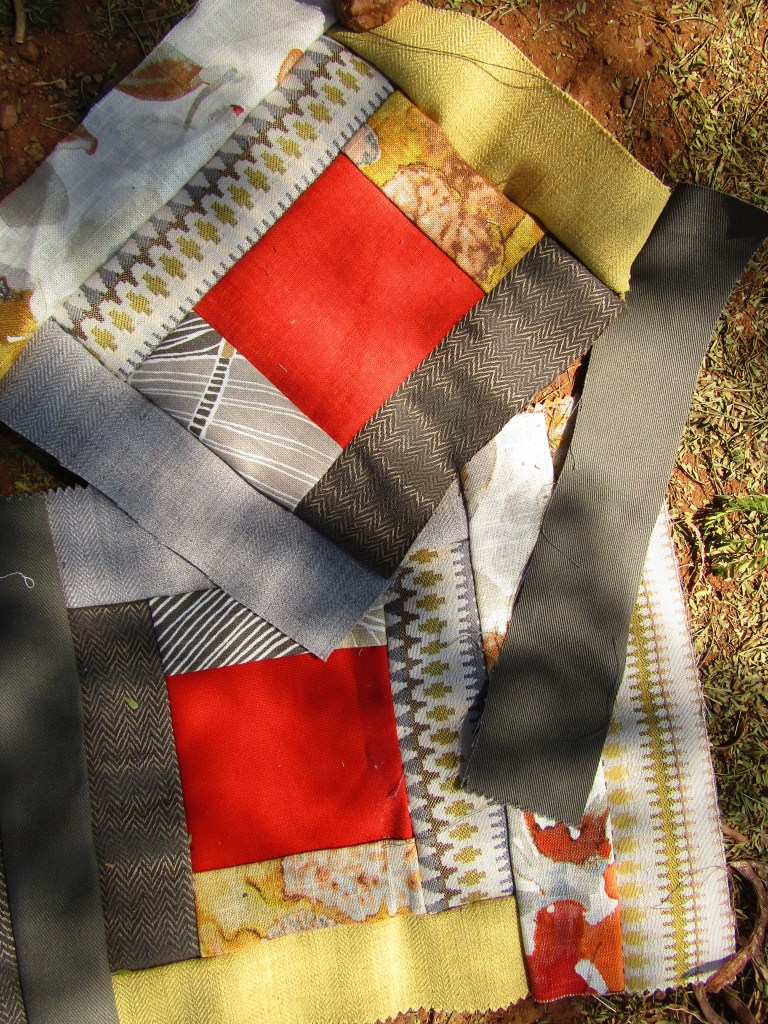
The ‘Sew Good’ project has a new member, who will be focusing on hand-sewing patchwork blocks in order to expand the range of products the group can offer. Ms Amory Tjipepa works in the security control room of an estate outside Windhoek and has plenty of time on her hands to make up these items from strips of contrasting furnishing fabric while she is on duty. Clients will be able to then have the finished squares made into cushions, quilts and pet beds.

Kenya’s experiment in banning plastic bags

When Kenya decided to introduce severe penalties for the manufacturing, distribution, sale and use of plastic (polythene) carrier bags two years ago, it seemed like a pragmatic response to a critical issue. However, as this article shows, not only are the sanctions disproportionate (in my view), but efforts to work around the ban by introducing ‘greener’ alternatives have had negative as well as positive consequences: https://www.bbc.co.uk/news/world-africa-49421885. Clearly, well-intentioned legislation to address environmental issues will be caught on the back foot if it fails to take into consideration the circumstances specific to any particular setting.